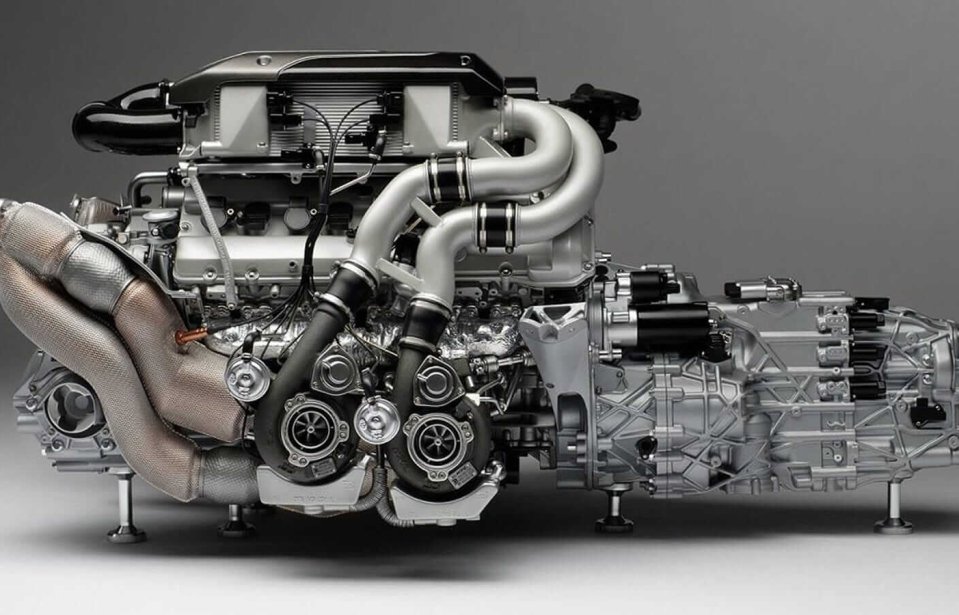
The W16 engine is a notable innovation in the automotive industry. The W16 engine is used primarily in high-performance cars, and its name comes from the W-shaped arrangement that its 16 cylinders have. The W16 engines are a great bridge between racetracks and everyday life. They offer power and efficiency. It is a petrol engine that delivers impressive power by combining turbocharging and twin-cylinder technology. These engines are typically 8.0 litres in size and run at high revs to achieve a huge power output. The W16 engine is the pinnacle in engine technology and captures the hearts of all speed enthusiasts. Automobile brands can enhance their value and appeal by adding W16 engines to their innovative and unique designs.
Table of Contents
What is the W16 Engine?
W16 engines are usually found in high performance vehicles. This engine design has a more compact cylinder bank compared to standard inline or V engines. The W16 engines are usually large, with a displacement of 8.0 litres or more, which allows them to produce high power. Multiple turbochargers are used to increase the power of these performance-oriented engines. The engine’s response time and efficiency are improved as a result. The W16 engine is a great choice for those who love speed and performance, but also incorporates technological innovations. These engines are widely used in the automotive industry. From racing cars to sports vehicles, they have a variety of uses.
History and Development of the W16 Engine
The evolution of the W16 engine is parallel to the development of high-performance automobiles. The first W16 was installed in the EB110, a model launched by Bugatti in 1997. The W16 engine was demonstrated in this model, which won the title as the fastest car at the time. This engine was developed over time and became a part of iconic cars such as the Bugatti Veyron. In the 2000s the Veyron achieved extremely high speeds, proving that the W16 engine can deliver more speed and power despite its heavy weight. The W16 engine has evolved over the years, incorporating racing technology and automotive engineering innovations. These engines are now being pushed to new levels by combining aerodynamics and power enhancements. It is therefore expected that W16 engines are going to be used more in automobiles in the future.

What are the W16 Engine Specifications?
The W16 engines are characterized by high performance and efficiency. These engines are able to produce high power output due to their cylinder capacities of up to 8.0 litres. The 16-cylinder engine is more compact, and its power output capacity increases. The W16 engines usually have four turbochargers to boost power and torque. The engine can produce more than 1000 horsepower and its high-revving capacity results in impressive performance. Fuel injection technology increases engine efficiency, which helps to achieve low emissions. The W16 engines are also robust and durable, which makes them suitable for racing and sports cars.
Advantages of the W16 Engine
The W16 engine offers a number of benefits in high-performance cars. These benefits are a result of the engine’s technology and design.
- High Power Output: W16 engines are able to produce a high power output due to their large cylinder volumes and turbocharger technologies.
- Compact Design: W16 allows more cylinders while using less space. This increases the efficiency of the engine.
- Turbocharging Support: W16 engines that can be equipped up to four turbochargers provide more power and improved acceleration performance.
- High RPM Capacity: These engines are capable of high RPMs and deliver increased performance. They also enhance the driving experience.
- Low Emissions: They emit low emissions thanks to their advanced fuel injection system.
The W16 engine is a popular choice for sports cars because of its advantages.
Disadvantages of the W16 Engine
The W16 engine is a high-performance engine, but it also has some disadvantages. The engine’s advanced technology and complex structure are the main causes of these disadvantages.
- Costly: W16 engine vehicles are expensive. The engine and the overall vehicle infrastructure cost a lot.
- Fuel consumption is high: These engines are characterized by their powerful power output. They consume significant amounts of fuel, even in normal driving conditions.
- Difficult Maintenance: The W16 engine requires a high level of expertise to maintain due to its technical complexity. Maintenance costs are also high.
- Overheating Risk: Because of their high performance, they are at risk of experiencing problems like overheating.
- Limited usage: W16 engines may only be suitable for racing and sports cars. They are not recommended for everyday use.
These are disadvantages that buyers of W16 engines should consider.
Working Principle of the W16 Engine
The W16 engine operates on fundamental principles that are common to all internal combustion engines. However, it has unique structural differences. The combustion of air-fuel inside the cylinders is what generates the power in this engine. The fuel-air mixture is first injected into each cylinder. This mixture is then ignited with spark plugs causing an explosive explosion. Due to the two-row arrangement of cylinders, the W16 engine is able to produce high torque and power. Turbochargers boost the power of an engine by using the energy from exhaust gases. The engine can deliver high performance at low revs. The engine’s pistons transmit rotational power to the crankshaft which then sends power to vehicle’s wheels. The W16 engines are extremely efficient and aim to achieve maximum performance.
Comparison of the W16 Engine with Other Engine Types
The W16 engine has unique advantages and features compared to the other engine types. Four-cylinder engines, V8 engines and six-cylinder engines are also common. The W16 engine is unique in its combination of cylinder number and design. It has higher torque and power values than engines with fewer cylinders, but a smaller structure than V8 engines. W16 engines are turbocharged, which helps them perform better than other engine types. In making comparisons you should consider factors like power output, fuel efficiency and consumption. In general, W16 engines are capable of exceeding 1,000 horsepower, while most V8 engines have difficulty reaching this level. The W16 engine is the best choice for vehicles that are performance-oriented.
Comparison of the W16 Engine with Other Engine Types
The W16 engine has many advantages and differences compared to the other types of engines. The engine is notable for its performance and power.
- Power and Performance: W16 engines are able to achieve high levels of power with turbocharger assistance, while other engine types deliver power ratings that are generally lower.
- Structure: While V6 and V8 engines are larger, the W16 engine has 16 cylinders arranged in a compact design.
- Fuel Efficiency: W16 engines are equipped with advanced technologies that can provide better fuel efficiency than conventional engines.
- Torque Values: The W16 engine is notable for its high torque values which improve acceleration.
- Intented Uses: The W16 engine is used in racing and sports cars. Other engines are preferred for everyday and more common vehicles.
This comparison will help you to better understand the W16 engine’s performance on the road and the track.
Fuel Consumption and Efficiency in W16 Engines
Fuel consumption can vary depending on engine performance and operating conditions. The fuel consumption of W16 engines in high-performance cars is higher than that of standard engines. These engines are able to achieve their efficiency goal thanks to the advanced engineering techniques and fuel injector systems. Fuel consumption can be affected by driving style and speed. It may even increase when driving aggressively. The W16 engine is also good at achieving low emissions, especially in sports cars. This is a very important factor for drivers who are environmentally aware. Engineers and car manufacturers are constantly improving the engine’s efficiency ratio. The W16 engine offers a balance between fuel efficiency and consumption.
Do W16 Engines Consume a Lot of Fuel?
These engines have a high performance and high fuel consumption. The turbocharged engines and large cylinder capacity of these engines cause them to use more fuel. Fuel consumption for vehicles equipped with W16 engines can be higher even under normal driving conditions. This is directly related, however, to the performance and power of the engine. Fuel consumption can be dramatically increased when used in high-speed racing situations. The car manufacturers are working on various technologies that will improve the efficiency of engines with W16 and reduce their fuel consumption. Contrary to popular belief, certain models of W16 engines can perform surprisingly well under certain circumstances. It is not unusual for W16 engines to consume more fuel due to their high power.
Power and Torque Values of W16 Engines
The power and torque of W16 engines is one of their most notable features. In general, power values exceed 1000 horsepower. However, in certain special production vehicles this value can even reach 1500 horsepower. The acceleration of vehicles is directly affected by high power output. This enhances the driving experience. The torque values of W16 engines are also important factors that affect their performance. These engines are notable for their high torque values. The maximum torque value is usually over 1000 Nm. This provides a powerful driving sensation even at low revs. W16 engines are a key component in setting performance standards for sports and racing cars. The engine’s characteristics allow the vehicle to perform well on both the track and the road.
In Which Segments Are W16 Engined Vehicles Used?
Typically, W16 engines are found in luxury and high performance vehicles. These engines are often used in sports cars, bespoke vehicles and luxury cars. W16 engines are used in models like the Bugatti Veyron or Chiron, which offer exceptional speed and performance. These engines are preferred by racing cars, track-focused vehicles and other vehicles that require high power output. In the luxury segment of the market, W16 engine technology can be found in hybrid vehicles that offer high performance and low emissions values. The W16 engined vehicles are usually produced in small numbers and have high prices. W16-powered cars are therefore a big attraction for car enthusiasts and collectors.
Should the W16 Engine Be Chosen? Who Is It Suitable For?
W16 engines are a good option for drivers who want high performance. These engines are attractive to a certain audience, but they do have some advantages. The W16 engine is a favorite among car enthusiasts, speed freaks and other people who enjoy the thrill of driving fast. The W16 engine’s high-speed capability and incredible acceleration capabilities are perfect for those who wish to experience the track. Those who are looking for a combination of luxury and comfort may also prefer sports cars powered by W16 engines. The maintenance costs and fuel consumption associated with W16 engines are factors that should be considered. Those who can afford them will choose these vehicles. Due to the fact that W16 engines are only used in limited production vehicles and special models, they offer prestige and exclusivity to their owners. A W16 engine offers high performance, luxury and uniqueness to vehicle owners.
Frequently Asked Questions About the W16 Engine
Is it difficult to maintain W16 engines?
The maintenance of W16 engines tends to be more difficult and complex than standard engines. The engine’s complexity and the technology used are to blame. Maintenance procedures are also more complex for W16 engines, which are usually found in luxury and high-performance vehicles. Maintenance costs can be high because specialist technical support is required. Maintenance procedures include oil changes, checking of the filtration system and inspections of engine components. Occasionally, software updates and electronic system tests may be required. Periodic maintenance is essential to ensure that the engine runs smoothly. The maintenance of W16 engine is a complex process that requires both technical expertise and knowledge.
Are W16 engines reliable?
W16 engines are built to high standards of reliability. W16 engines are designed and manufactured to meet high reliability standards. The engines are usually made with high-quality materials that increase their resistance to wear, malfunctions and other problems. During performance tests, many vehicles equipped with W16 engines are examined to determine the engine’s reliability in various operating conditions. The W16 engine is expected to operate reliably under normal conditions. As with any engine, there may be problems if periodic checks and maintenance are not carried out. The maintenance habits of owners also affect the reliability of the W16 engines. In conclusion, the W16 engines are reliable engineering examples.
How long do W16 engines last?
The life expectancy of W16 engines depends on a number of factors. The engine’s life expectancy can be extended by performing regular maintenance, using high-quality fuel and driving in the right conditions. In general, W16 engines can last up to 200,000 km or more. This period can vary depending on the vehicle. Some high-performance cars may be able to fall below this limit if they are used intensively. Maintaining routine maintenance and performing periodic inspections will help to maintain the health of your engine over the long-term. The W16 engines have been designed to be durable and robust by the manufacturers, so they are able to last a long time under suitable conditions. When purchasing a car, you should also consider factors such as the age of the engine and its mileage. This will help you to better understand the lifespan of W16 engine.
What to Look for When Buying a W16 Engine Vehicle?
When purchasing a car with a W16 motor, there are several factors to take into consideration. First, pay attention to the technical details of the vehicle and its engine history. The maintenance records of the engine provide valuable information about the vehicle you are buying. Previous maintenance and replacements can give clues as to the health of the engine. Second, pay attention to factors like immobilisation and excessive mileage. These factors can affect the value and reliability. Thirdly, it is important to test the vehicle and observe its performance. Normal driving can reveal the acceleration capabilities of W16 engines. The model selected should reflect the expectations of the vehicle and the options available within your budget. These factors will help you make an informed choice when buying a vehicle with a W16 motor.