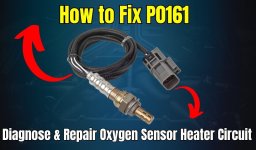
Oxygen sensors measure the amount of oxygen present in exhaust gases. The sensors continuously send this information in the form a voltage to the Powertrain Control Module. This information is used by the Control Module, in conjunction with other data sent by sensors, to regulate fuel injection into the engine. The PCM will also need to receive constant voltage signals from the sensor. The PCM will store the P0153 error code in memory if the oxygen sensor does not respond quickly to changes in the air-fuel ratio as you accelerate. The cylinder 2 side of the engine is referred to as ‘Bank 2’, while the oxygen sensor upstream before the catalytic convertor is referred to as ‘Sensor 1″. There is only one bank of engines in 4-cylinder systems. This code is usually seen on 6- and 8-cylinder cars.
Table of Contents
What are the possible causes of fault code P0153?
- Oxygen sensor failure
- Short circuit or open in the sensor cable
- Leaking exhaust manifold
- Engine vacuum leaks
- Build-up of carbon or oil on the O2 Sensor (excessive accumulation clogs up the ports that the sensor uses to determine the air-fuel proportion)
- A dirty Mass Air Flow (MAF)
- Incorrect fuel pressure
What are the symptoms of fault code P0153?
- The engine fault lamp is on or flashing
- The misfiring of the engine or engine stalling
- A rich or lean engine
- Fuel consumption increases
- Engine power loss
- Increased emissions
- Smoke from exhaust
How to Fix Fault Code P0153?
- Replace the faulty oxygen sensors (Bank 2, Sensor 1
- Repair damaged cables and loose connectors in the oxygen sensor circuit
- Repair vacuum leaks
- Repairing leaks in exhaust systems
- Cleaning dirty mass airflow sensor
- Cleaning of the O2 sensor cable and terminals
How serious is fault code P0153?
The vehicle will not stop running if the fault code P0153 is present, but you should rectify it as soon as possible. Fuel consumption can increase significantly. There may also be a noticeable decrease in the engine’s performance and power.