

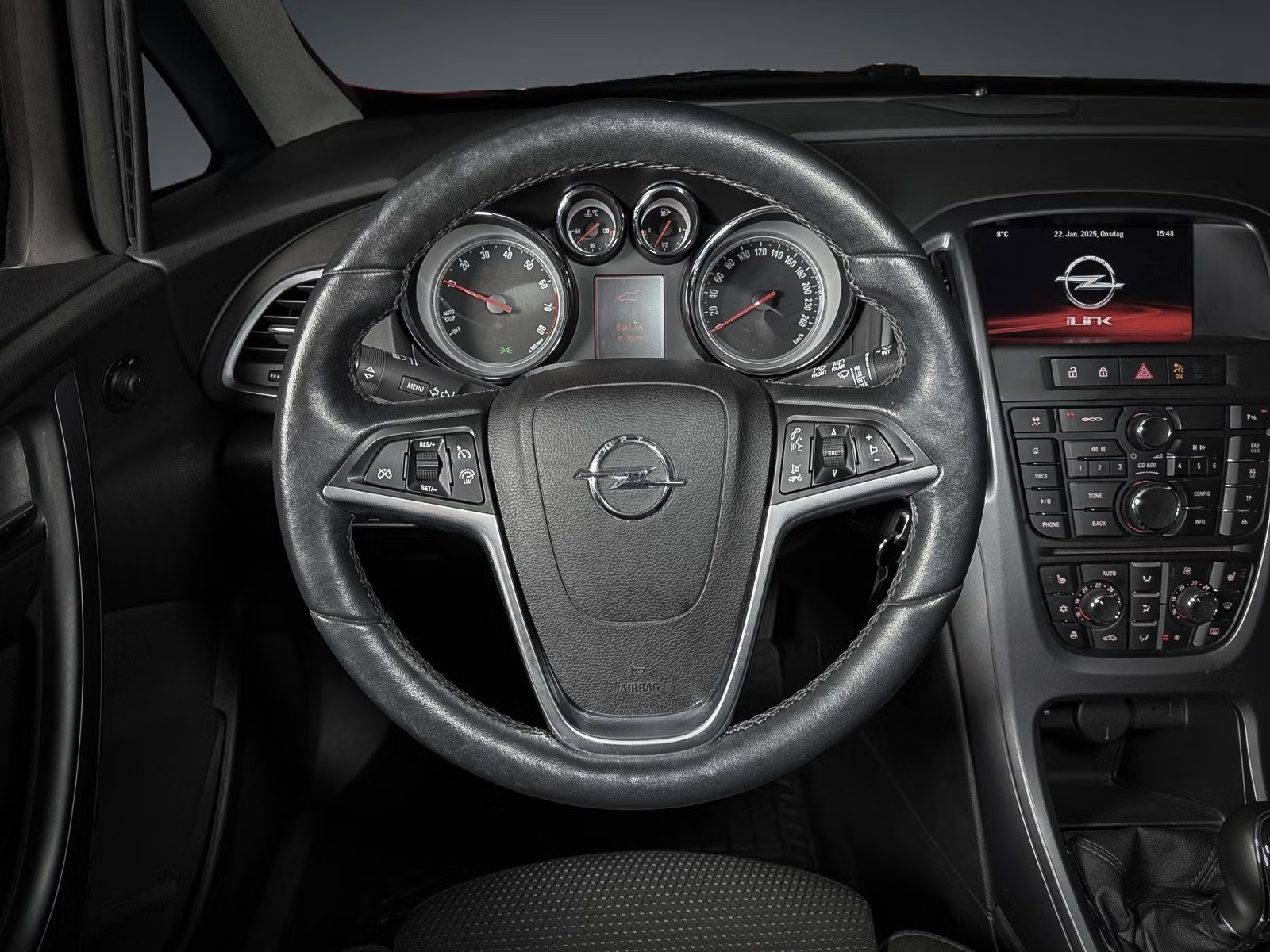
I have a 2015 Opel Astra Turbo 1.4. I have an overheating problem. The temperature gauge is stable at 90 degree when driving up hills or in normal traffic. There does not appear to be an overheating issue. After stopping the car, turning on the ignition (without starting the motor) and waiting 3-5 minutes for the gauge to rise, it reaches 110-130 degree. The temperature drops to 90 degree as soon as the car is started.
My vehicle does not have any antifreeze or boiling. The problem still persists after I replaced my thermostat about 10,000 km ago and the temperature sensor recently. Please let me know if you have had a similar problem or a suggestion for a solution.
Summary of the Situation
The temperature gauge will rise to 110-130degC after stopping the car and turning on the ignition.
Problem Source Explanation: Possible Causes
Solution Recommendations: (Step-by-Step)
A specialist or authorised service centre equipped with an OBD device should check the temperature instantly using an OBD.
Determine the temperature at which a fan will engage.
Check the fan sensor if it is separate.
Software can be used to change the fan control algorithm, especially in Astra models equipped with 1.4T engines.
Some vehicles can experience fan delay errors if the software is not updated.
Over time, the relay can weaken and cause the fan to be turned on too late.
Heat can cause problems with relays or fuses.
It may not work if the connectors and cables are loose.
Aftermarket products can have low temperature sensitivities, even if the thermostat is new.
Prefer original or high-quality OEM items.
The gauge may not reflect the temperature difference until it is too late. This could be due to local obstructions in the fins of the radiator or the block.
Simple Home Test Method
Conclusion and Recommendation
The temperature gauge may rise abnormally, but the engine does not overheat or suffer damage. This is usually due to gauge deviation, fan-circuit delay, or ECU response differences.
What should be done?
I’ll follow your guide and let’s see if I can solve the issue.
Keep me updated if u’ll have another issues after your checkup please.
There was some damaged wires between fan and ECU. I just repaired them and gonna do some test drives for couple days to figure out if problem completely solved.