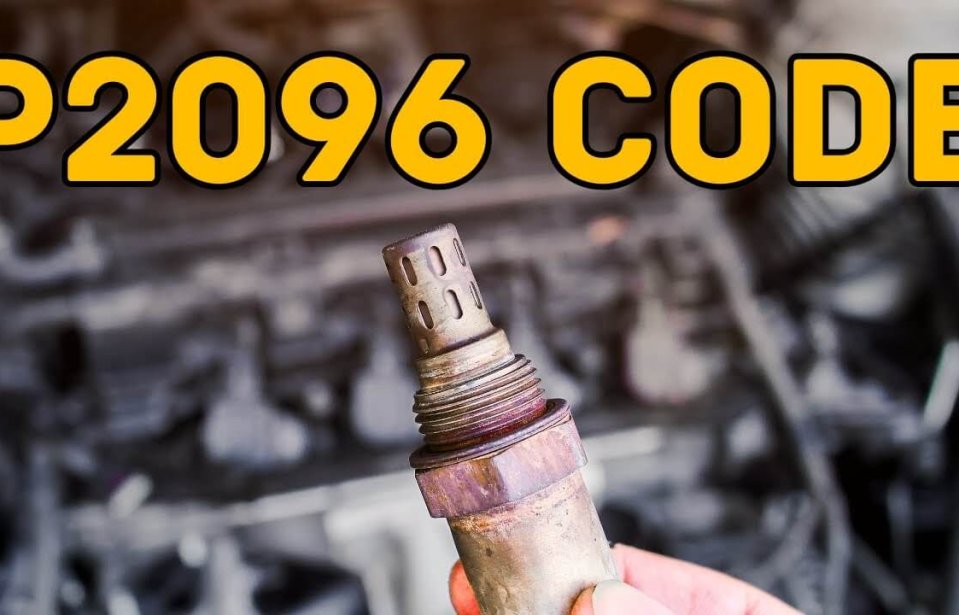
The air-fuel ratio of your vehicle is crucial to the performance of its engine. You could damage your engine if your vehicle doesn’t have the right air-fuel mixture ratio. The P2096 code indicates that there is an issue with the air-fuel ratio of your vehicle.
Modern engines are equipped with two types of oxygen sensors to detect the ratios between air and fuel. The engine will run on a “lean mixture” if your vehicle contains too much fuel and too little air.
This code is generated by a specific problem with the ‘Oxygen Sensor 2“. This sensor is located below the catalytic convertor. The P2096 code is generated by the engine control unit when it detects that there is too much fuel and not enough air.
Table of Contents
P2096 Fault Code: What Are the Symptoms?
The fault code P2096 may present with a variety of symptoms, depending on the component that is at fault.
- Engine fault light illuminating
- Starting the engine is difficult
- The vehicle has difficulty accelerating
- The ignition timing is incorrect
- High fuel consumption
- Idling is not allowed
- Engine knocking or pinging
- Sulphur or sour egg smell coming from exhaust
- Catalytic converter overheating
- Related fault codes
The O2 sensor will send a signal to ECU when it detects excessive air in the combustion chamber. This causes the ECU to supply more fuel. This increases fuel consumption because it can cause engine damage, oil degradation or even overheating the catalytic converter.

What are the causes of fault code P2096?
Oxygen sensor checks if the catalytic convertor is working properly by measuring unburned air in the system. The most common reason for the P2096 error code is a faulty sensor. However, there are other situations that can occur. The P2096 code is caused when the sensor fails to receive a signal that meets the specified specifications.
- Fuel pressure regulator or damaged injectors can cause a lack of fuel.
- Excess air enters the system when there is a leak in the hoses and lines.
- Damaged gaskets, corrosion or a cracked exhaust manifold.
- The oxygen sensor or circuit may be faulty.
- Catalytic converters that are defective.
Notes:
The Mass Air Flow sensor (MAF), which measures the amount of air entering the intake system, is used to regulate the fuel-air mix. You may also see a P0100 code in addition to the code P2096.
The catalytic converter is likely to be the cause of the problem if the P0420 and P2096 fault codes are present.
How to Diagnose and Fix Fault Code P2096?
- Check the electrical circuits and cables related to the exhaust system.
- While the engine is running, look under the vehicle. The catalytic converter will glow if it is blocked.
- Listen for any leaks between your mass airflow sensor and intake manifold. Listen for whistling sounds.
- Check that the cylinders fire correctly. Spray some water into the exhaust port of the cylinder. If the water evaporates very slowly, then the cylinder may not be firing properly. You can also remove the plugs to check.
- Check the condition and the condition of the plug wiring.
- Replace the oxygen sensor if you receive an ‘heater circuit fault’ code.
- Fuel quality may also be a cause of the P2098 fault. Use higher-quality fuel.
Resolving Potential Issues
- Replacing fuel filters, fuel pumps or pressure regulators.
- Repairing or replacing leaks on hoses or lines.
- Replace the oxygen or mass flow sensor
- Replace the spark plugs
- Replace the catalytic convertor
How Important is Fault Code P2096?
The incorrect mixture of air and fuel can damage the engine or other components within the exhaust system. The fault should therefore be investigated as soon as possible and fixed.