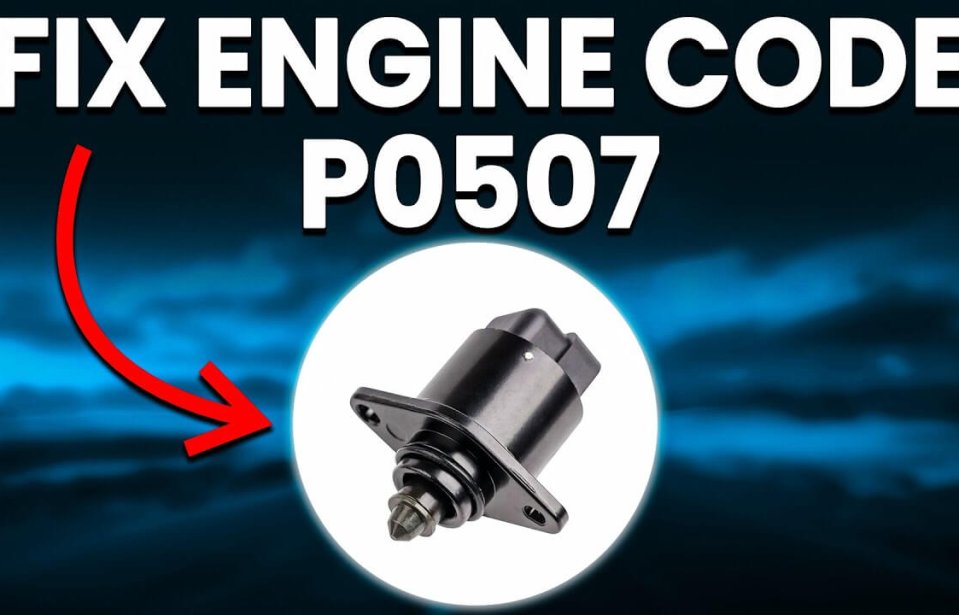
This code is an OBD2 general fault code that refers to a problem with the idle control system. This code is similar to P0505 or P0506. The P0507 fault indicates that the idle system has higher RPMs than expected. The ECU is programmed with a certain RPM range. The manufacturer has pre-programmed this RPM range. The P0507 fault is activated if the idle speed exceeds the limit for a period of time (up to 200 RPM). The ECU will put the vehicle in safe mode when this code is activated. It will also illuminate the engine fault indicator on the control panel to inform the driver.
The ECU controls the Idle Speed Control valve (ISC) in many older vehicles. Idle Air Control valve (IAC valve) is another name for the ISC valve. This valve controls the amount of air that enters an engine at idle. The engine will remain at a constant speed while idle. Close the valve to reduce bypass air flow. This will result in a lower RPM.
The ECU will determine the idle speed when the throttle is closed by using the crankshaft sensor to measure the engine speed. To regulate idle speed, the ECU uses additional sensors such as the AC temperature sensor, the coolant pressure sensor and the speed sensor.
In most new cars, the electronic throttle control (ETC), instead of ISC or IAC valves, is used. The mechanical linkage between the throttle and the ETC system is removed. The control module (ECU), instead, uses an electric motor in order to operate the throttle body. To determine the operation of the throttle, the ECU looks first at the position sensors for the accelerator pedal (APP) as well as the throttle position (TP).
The P0507 code is set if, as explained above, the idle speed exceeds the predetermined value over a period of time. Standard RPMs vary by vehicle, depending on its make and model. However, most engines are set to idle between 600 and 800-RPM.
In order to reduce exhaust emissions and prevent the engine from stalling, it is important to maintain the correct idle speed.
Table of Contents
What are the Causes of Fault Code P0507?
Most often, vacuum leaks within the engine are the cause of P0507 error code. The code will usually be triggered, even when the Idle Air Control valve (IAC) is closed. This simply means that there is a leak in the engine and the system tries to reduce idle speed by closing idle air bypass.
- Intake air leaks
- Damaged and loose electrical connections
- Issues with air intake system
- IAC/ISC sensor faulty or clogged
- Carbon buildup in the throttle body
- Faulty hydraulic pressure switch
- Problems with the ETC Motor
- Alternator faulty
- Restricted exhaust
- Problems with Positive Crankcase Ventilation System (PCV)

What are the P0507 fault code symptoms?
- Engine fault light illuminates
- High engine idle Speed
- Idle Speed Fluctuation
- Difficulty in starting the vehicle
- Engine stalling
How to Fix Fault Code P0507?
- Clean the throttle body
- Replace or clean the idle air valve
- Checking vacuum lines and repairing any punctured or torn hoses. Also, tightening loose connections that cause vacuum leaks.
- Repairing your charging system
- Replace the hydraulic steering pressure sensor
How Serious is Fault Code P0507?
The fault code won’t prevent you from driving, but it may cause problems like the engine stalling or a high idle speed. It can also cause hard gear changes, difficulties starting, and/or fluctuating speeds. You must fix the problem as soon as you can to avoid increased repair costs and engine damage.