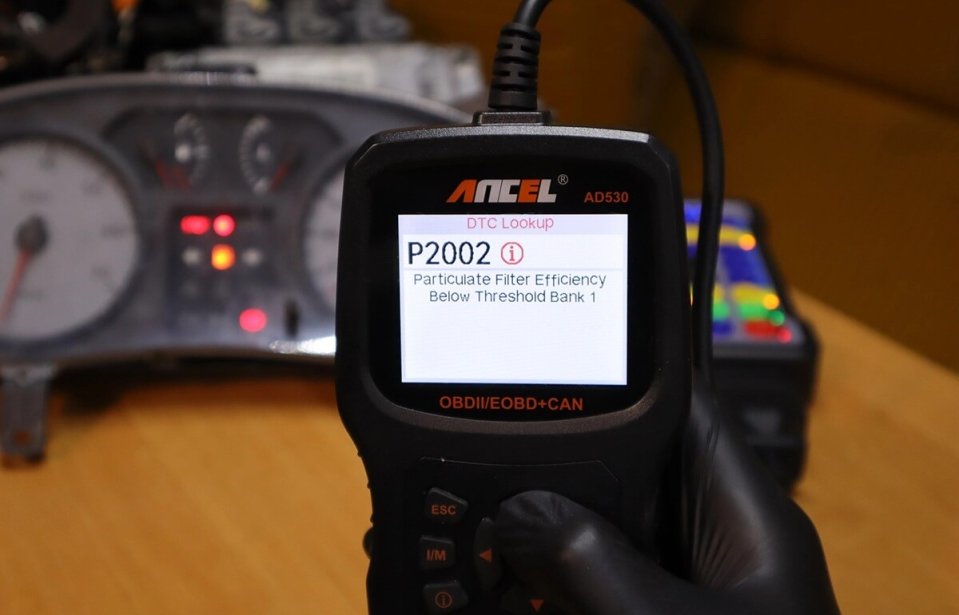
The emission system is affected by the fault code “P2002 diesel particle filter efficiency below threshold”. Diesel vehicles produced in 2007 or later are equipped with an exhaust system that includes a diesel particulate (DPF) filter to reduce soot emissions. This fault code is found in Volkswagen, Audi and Ford cars, vans, and commercial vehicles.
Table of Contents
When the DPF is operating, it creates a small amount of pressure. The DPF is monitored by the vehicle computer via pressure feedback sensor located on the DPF. It will generate the P2002 fault code if it detects an inconsistency between the pressure limits during two driving cycles for any reason.
The DPF is able to re-burn and remove soot deposits. The DPF is your last line of defense for reducing emissions. The DPF is built to last for a long period of time, as it works in harsh conditions. The light will go out and the code will be cleared once the regeneration is completed. P2002 is a real-time error and will automatically clear itself once the fault has been resolved. The code will remain fixed until all repairs are completed and cleared manually with an OBD scan.

What are the Symptoms of P2002 Faults?
- The engine management system increases the exhaust temperature to burn excess soot in the DPF. This causes fuel consumption to increase.
- The P2002 code will also illuminate the ‘Engine Control Light.’ While the DPF regenerator is running, the light can remain on or flash. The vehicle’s acceleration decreases when you press the pedal.
- The engine oil will lose its properties and life as the temperature of the engine increases during DPF regeneration.
- The vehicle will go into limp mode if the DPF has not been cleaned.
What causes the P2002 fault code?
- This code is caused by the long duration of the process. The DPF must be heated between 500C and 600C in order to burn away deposits. Despite all its efforts, the ECU is unable to generate enough heat at low revs to clean the DPF.
- Sensor values are altered by air leaks after the DPF.
- ECU malfunction
- Fuels with a high sulphur level cause the DPF to clog quickly.
- Modifications made to the vehicle
- Faulty DPF
P2002 Fault Diagnosis and Repair Methods
There are few solutions for DPF issues. The DPF is temporarily clogged by particles from the engine. The DPF should be visually checked if the fault light is illuminated and the code P2002 appears.
Check for loose connections in the first bank of exhaust and engine side connectors.
Sensors located behind and in front of the DPF must be checked. The cables and connectors must be examined carefully. The sensor cables must not be placed on top of DPF. The unit should also be tested with a leak detection device to check for any leaks around and on it.
If the checks above reveal no problems, you should drive the vehicle at a motorway speed for about 30 minutes in order to raise the exhaust temperatures high enough for regeneration. If this isn’t possible, you can still achieve the same results by idling your vehicle at 1400 RPMs for approximately 20 minutes.
The best thing to do if the problem still persists is to bring the vehicle into a service center. The ECU and sensor signals can be monitored to determine if the vehicle is in the regeneration process.
This code may be triggered by certain modifications such as cold air intake (CAI), cat-back exhaust systems, or other similar modifications. It could also affect the manufacturer’s warranty.
Frequently Asked Questions about P2002
What does it mean when “DPF efficiency is below threshold”?
The filter is still dirty after it has tried to clean itself.
The car was expecting cleaner exhaust after regeneration, but it didn’t receive it.
Why is P2002 more common in city driving than highway driving?
Short trips = BIG PROBLEM
City driving causes;
Low exhaust temperature
No proper regeneration
Soot accumulates faster than it can be burned
The DPF is never hot enough to self-clean.
What is the difference between passive regeneration and active regeneration?
Passive regen,
Natural occurrences at highway speeds
No warning lights
The DPF’s Best Interest
Active regen,
ECU injects additional fuel to heat exhaust
Uses more fuel
What happens when the filter has already been dirty?
Too much active regen = trouble coming.
Can something else cause P2002?
Yes, it happens quite often.
There are many hidden causes, including:
Faulty DPF Pressure Sensor
Cracked or melted hoses
Leaks of exhaust before the DPF
Temperature sensor failure
EGR problems
DPFs can be innocent.
Why does clearing P2002 do nothing?
The code is not removed when you clear it.
This is like deleting an alert on your phone rather than charging the battery
As soon as you check again, the problem returns.
What happens in the engine if you ignore P2002?
The bad things pile up slowly:
Back pressure increases
Turbo works harder
The EGT (exhaust temperature) increases
Fuel is diluted with engine oil
Eventually lagging mode or shutdown
It is not an instant killer but a slow one.
When is forced regeneration effective?
Forced regen only works if:
DPF is not physically blocked
Sensors are accurate
No exhaust leaks
Engine oil level is correct
Regen will not help if the soot becomes ash.